
Wingfoil
The new frontier of water sports
Fly Over the Water
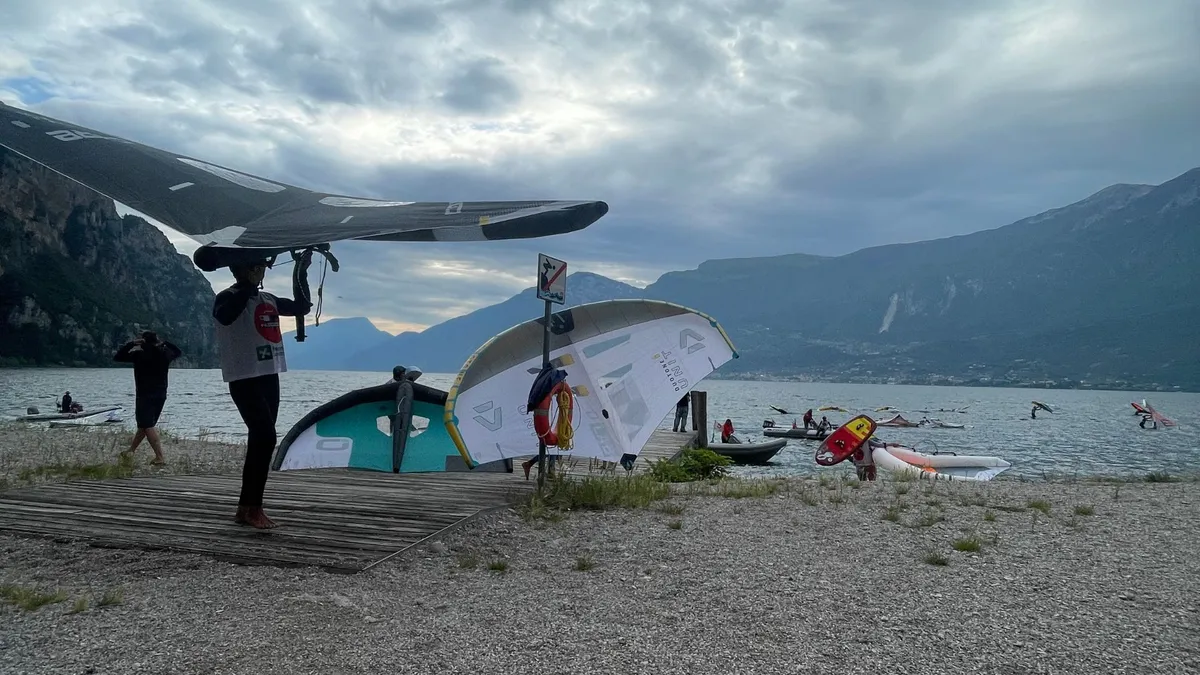
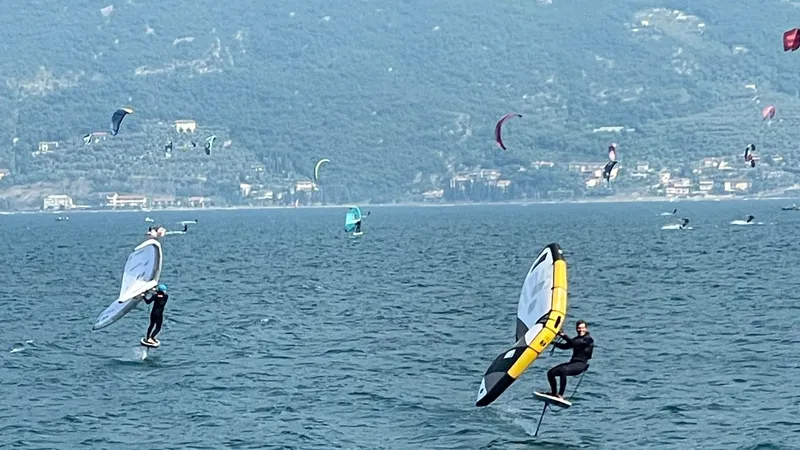
Wingfoil is the newest and most innovative discipline in the world of water sports, and Campione del Garda offers the perfect conditions to practise it. By combining an inflatable wing held in your hands with a board fitted with a hydrofoil, you can literally fly above the surface of the water.
Thanks to the steady thermal winds and the relatively calm afternoon waters, Campione has quickly become one of the most popular destinations in Europe to learn and practise wingfoil.
Why Wingfoil
Easy to Learn
Compared to other foil sports, the learning curve is more accessible
Silent
No engine noise, only the sound of wind and water
Versatile
It can be practised in light winds from just 10-12 knots
Unique Sensations
The feeling of flying over the water is indescribable
Ideal Conditions
Wingfoil requires less wind than traditional kitesurfing or windsurfing, making the afternoon sessions with the Ora particularly well suited to this discipline.
Morning with Pelèr
15-27 knotsMore developed waves, for intermediate and advanced riders.
Afternoon with Ora
10-20 knotsGenerally calm lake, ideal for learning and improving.
Today's wind conditions
Schools and Courses
Two schools specialising in wingfoil operate in Campione del Garda, welcoming riders of every level — from absolute beginners to those looking to refine advanced manoeuvres.
F-ONE equipment rental, structured courses and guided in-water sessions for all levels.
Official wingfoil equipment test centre, small-group lessons and intensive courses for those starting from scratch.
Learning Path
The typical wingfoil progression follows six phases. Working through each one calmly — without skipping steps — is what makes the difference between learning safely and building habits that are hard to correct later.
Wing on land
Before touching the water, you learn to inflate the wing, identify the wind window and manage the pull. Exercises on a beach or grass in light wind: grip on the handles, steering with one and two hands, quick depowering.
⚠ Common mistake: gripping the handles too hard. The wing is steered with the wrist and forearm, not with hand strength.
Wing in the water without a board
Standing in waist-deep water, you practise body dragging: the wing pulls you across the surface and you learn to feel the power and release it quickly. This is the safest way to get comfortable with the wing's pull before stepping onto a board.
⚠ Common mistake: fighting the pull instead of going with it. Let the wing move you and follow through.
First glides without the foil
You stand on a wide board (120 litres or more, preferably inflatable for softer falls) and use the wing to glide across the water without the foil. The goal is to find your balance and learn to manage the wing's power while moving.
⚠ Common mistake: looking at your feet instead of the horizon. Head up, eyes forward.
Introduction to the foil in shallow water
Using a board with foil — aluminium for beginners, more stable and cheaper to repair than carbon — you give short bursts of power with the wing. The foil begins to lift the board: you feel the characteristic lightness of flight. The aim here is not yet to stand fully, but to recognise the feeling and understand how the foil responds.
⚠ Common mistake: putting too much weight on the tail. Keep your weight evenly distributed between front and back foot.
First flights and height control
The board fully lifts off the water. Foil height is managed by weight shift: more weight on the front foot lowers the foil, more weight on the back foot raises it. Practise short flights of 10–20 seconds and learn to touch back down on the water with control when you lose stability.
⚠ Common mistake: holding the wing too high or too low. The neutral position — wing perpendicular to the wind — is the most stable and the safe reference point.
Manoeuvres and turns
With controlled flight established, you learn directional changes: gybe, transition, flat-footed turns. At this stage you can start testing carbon foils and smaller boards (80–100 litres) for greater speed and responsiveness in manoeuvres.
⚠ Common mistake: rushing turns without managing foil speed. The timing of manoeuvres comes with repetition, not with haste.
Equipment
Sharing the water between disciplines
Campione del Garda is shared simultaneously by wingfoilers, kiters, windsurfers and sailing boats. Attentive co-existence is essential: mutual respect is not just good practice — it is what allows everyone to ride safely.
Wingfoil often moves silently and at high speed: sailors or kayakers may not hear an approaching rider. Keeping at least three board-lengths away from other water users is the fundamental rule. When crossing paths, the upwind user generally has right of way — though courtesy matters more than the rulebook.
Motorised vessels have right of way over all sailing and foiling sports. The foil is a rigid, sharp structure underwater: a collision can be dangerous for the fallen rider and for anyone nearby. Those still learning should actively seek open, uncrowded stretches of water to reduce risk for everyone.
Campione del Garda and the other spots on the lake
Lake Garda offers several wingfoil spots, each with its own character.
Torbole, at the northern tip of the lake, is the historic centre of windsurfing and brings stronger winds and more formed waves — excellent conditions for experienced riders but less suited to those learning to manage the foil. Malcesine on the eastern shore has a picturesque setting but fewer dedicated wingfoil services. Limone sul Garda attracts mainly windsurfers and offers more limited spot access.
Campione del Garda stands out for its combination of reliable wind and more accessible conditions: the afternoon Ora delivers progressive wind (10–20 knots) onto a generally flat water surface, ideal for beginners learning to control the foil without battling chop. Schools, services and accommodation are all within walking distance of the spot.
Go deeper with the full guide
We have put together everything you need in the wingfoil guide: why Lake Garda ranks among Europe’s best destinations, local schools, equipment advice and the best time to visit.
Related Sports
Frequently Asked Questions
Sleep 5 minutes from the spot
DV GardaSuite — Apartments with Lake View
Campione del Garda
- Walking distance to wingfoil and kitesurf spots
- Lake view and private beach
- Book direct with no commission