
The Cotton Mill
A monument of industrial archaeology on Lake Garda
The Industrial Complex
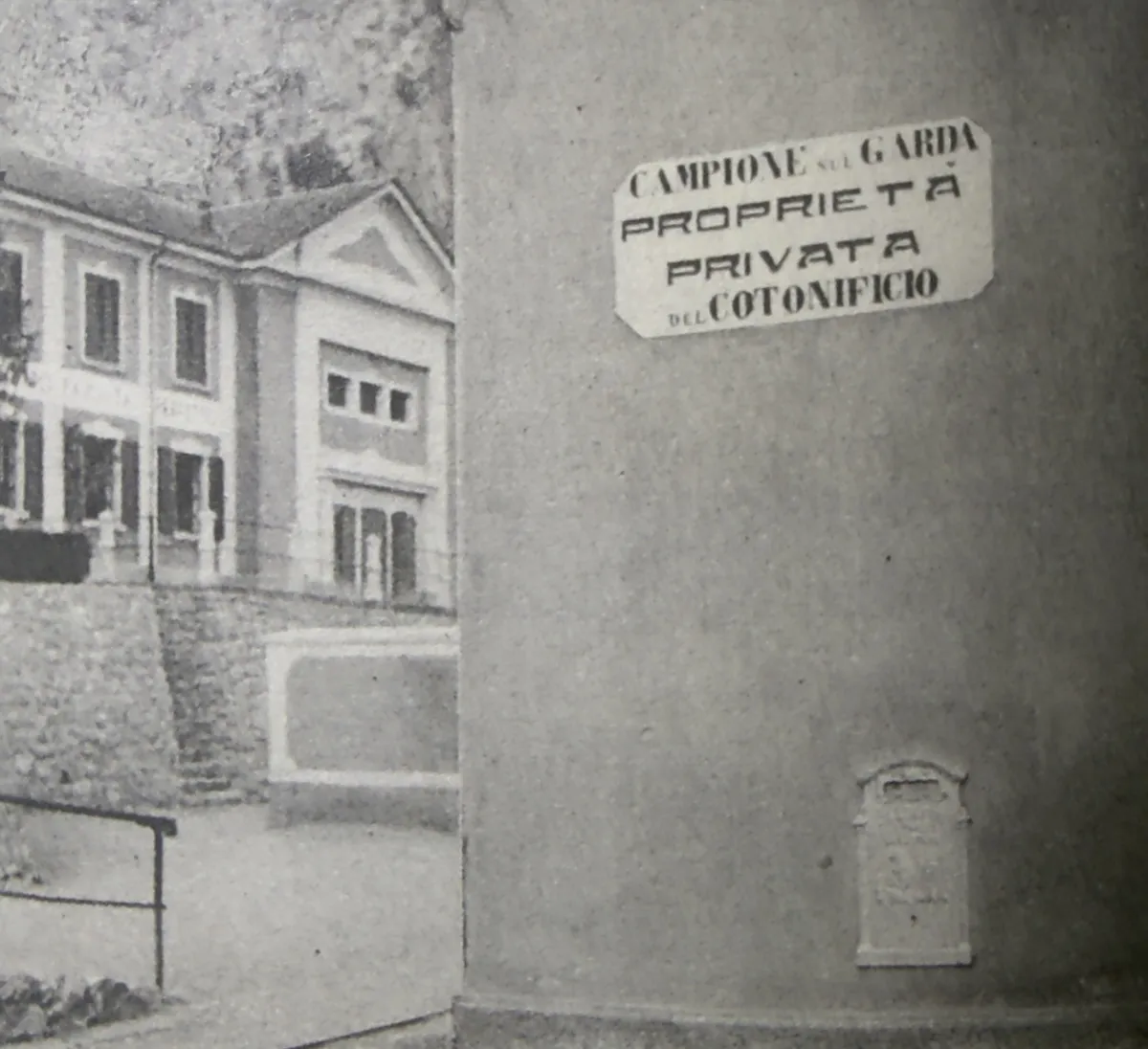
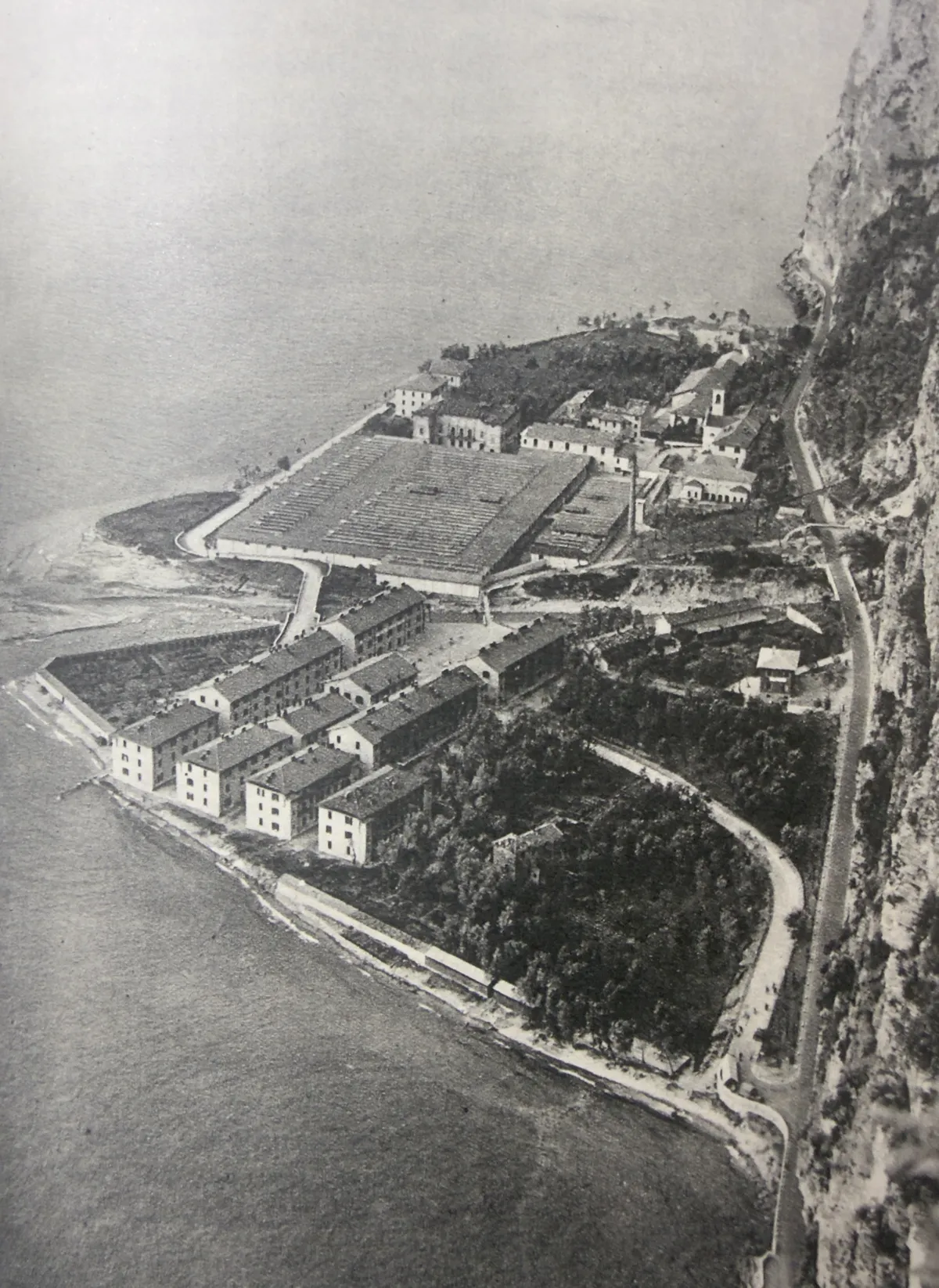
The cotton mill of Campione del Garda was founded in 1896 and was one of the most important industrial complexes on Lake Garda. The structure occupied much of the village's flat area and harnessed the hydraulic energy of the San Michele stream to power the machinery.
The Workers' Village
Around the factory a true workers' village grew up, complete with housing, a school, a church, a theatre, a company store and shared services. Campione thus became a "company town", an advanced social and economic model for the time.
The village was an example of rational urban planning: the workers lived in purpose-built houses and could make use of health, educational and recreational services. The community was self-sufficient, with its own internal economy managed by the company.
Features of the Complex
Production Plant
Over 10,000 m² of covered surface
Workers' Houses
Housing for hundreds of families
Social Services
School, church, theatre, infirmary
Hydraulic Energy
Turbines powered by the San Michele stream
The Closure and the Legacy
The cotton mill remained active until 1981, when the crisis of the textile sector caused its definitive closure, leaving an architectural and historical legacy still visible in the village today.
Today the buildings of the cotton mill have been partly converted, while preserving their imposing original structure intact. The complex is one of the most significant examples of industrial archaeology in northern Italy.